
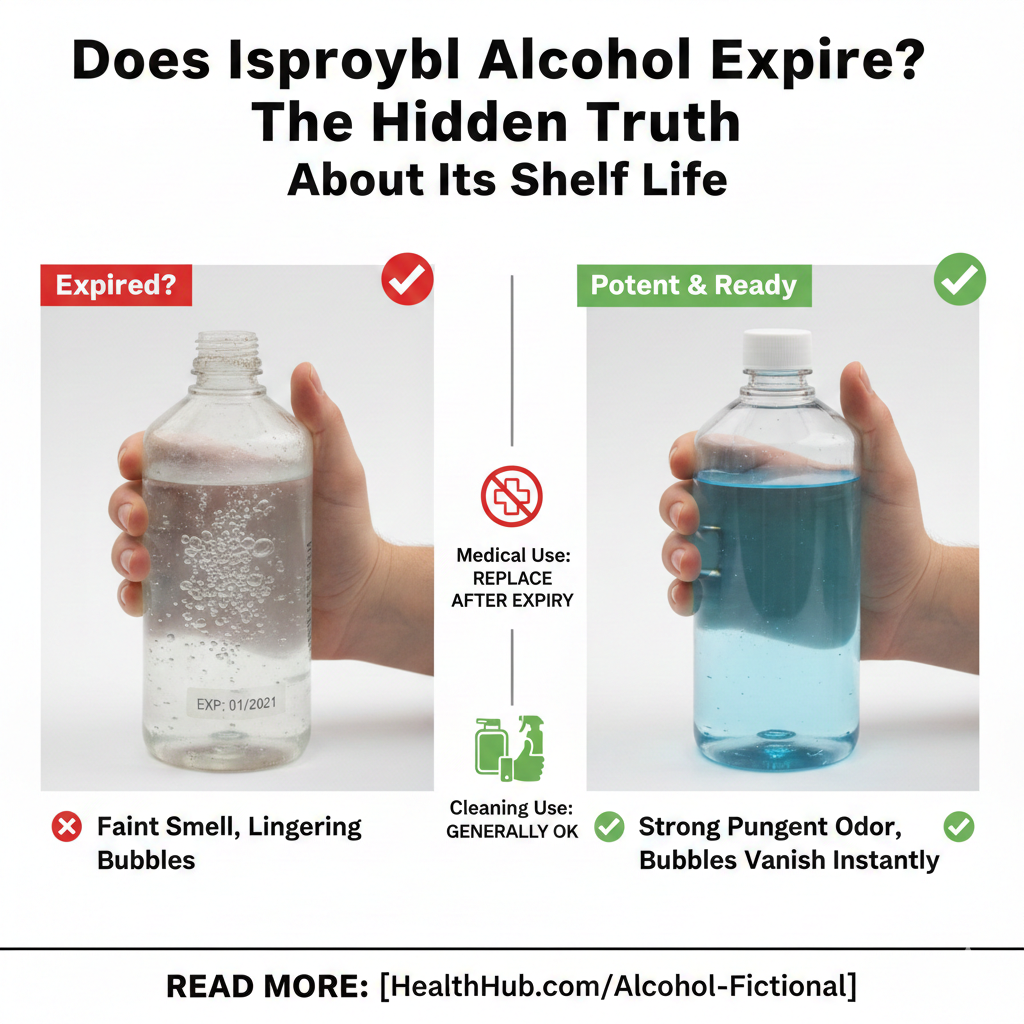
If you’ve ever reached into the back of your medicine cabinet during a minor scrape or for a quick DIY cleaning project, you’ve likely pulled out a dusty bottle of isopropyl alcohol (rubbing alcohol). You glance at the bottom and see a date that passed two years ago.
Does isopropyl alcohol actually expire, or is that date just a suggestion? While the chemical itself is remarkably stable, the answer is more nuanced than a simple “yes” or “no.”
Understanding the “Expiration” of Isopropyl Alcohol
Strictly speaking, isopropyl alcohol (C₃H₈O) is a stable chemical compound. Unlike organic materials or complex medications, it doesn’t “spoil” or turn into something toxic. However, it does degrade in effectiveness over time.
Why Does It Have an Expiration Date?
The expiration date printed on the bottle—usually 2–3 years from the date of manufacture—is largely a regulatory requirement. It indicates how long the manufacturer guarantees that the concentration of alcohol (e.g., 70% or 91%) remains at the level stated on the label.
The Science of Evaporation
The primary reason isopropyl alcohol “expires” is evaporation. Alcohol is highly volatile, meaning it turns into vapor quickly when exposed to air.
- The Seal Factor: Even with the cap on, plastic bottles are slightly permeable. Over years, the alcohol molecules slowly escape.
- Water Dilution: Isopropyl alcohol is hygroscopic, meaning it can absorb moisture from the air. As the alcohol evaporates and the bottle breathes, the ratio of alcohol to water changes.
If your 70% alcohol solution drops to 50% due to evaporation, it may no longer be effective at killing certain pathogens.
How to Tell if Your Rubbing Alcohol is Still Good
You don’t need a chemistry lab to determine if your bottle is still useful. Here are three quick checks:
- The Smell Test: Isopropyl alcohol has a sharp, pungent odor. If you open the bottle and the scent is faint or non-existent, the alcohol has likely evaporated, leaving behind mostly water.
- The Bubble Test: Shake the bottle. Alcohol has low surface tension, so bubbles disappear almost instantly. If the bubbles linger like they would in plain water, the concentration is low.
- Visual Consistency: The liquid should be crystal clear. If it looks cloudy or has floating particles, it has been contaminated and should be discarded.
Is It Safe to Use Expired Rubbing Alcohol?
The safety of using expired alcohol depends entirely on intent.
For First Aid (Not Recommended)
If you are treating an open wound or prepping skin for an injection, do not use expired alcohol. For sterilization, you need a precise concentration (typically 70%) to effectively penetrate the cell walls of bacteria. If the concentration has dipped, you risk infection because the solution is no longer a reliable antiseptic.
For Household Cleaning (Generally Safe)
If you are using it to clean a mirror, wipe down a keyboard, or remove sticker residue, expired alcohol is generally fine. It might not be quite as powerful, but it won’t cause any harm. Just be prepared to use a bit more “elbow grease” if the solvent strength has faded.
[Image showing a comparison table of isopropyl alcohol concentrations and their uses]
70% vs. 91%: Which Lasts Longer?
Interestingly, 70% isopropyl alcohol is often considered the “gold standard” for disinfection because the water content helps it permeate the cell walls of organisms. However, 91% or 99% solutions may technically “last” longer in terms of remaining above the effective disinfection threshold.
Because they start at a higher concentration, they can lose more alcohol to evaporation before they fall below the 70% mark required for heavy-duty germ-killing.
Pro-Tips for Extending Shelf Life
To ensure your supplies stay potent for as long as possible, follow these storage rules:
- Tighten the Cap: This is the most common failure point. Always ensure the lid is threaded correctly and tightened firmly after every use.
- Cool, Dark Storage: Heat accelerates evaporation. Store your bottles in a cool cabinet away from direct sunlight and radiators.
- Keep in Original Container: The plastic used for these bottles is specifically designed to minimize chemical reactions and evaporation.
The Verdict: When to Toss It
If you find a bottle that is more than a year past its expiration date and you intended to use it for medical purposes, it is best to replace it. It is an inexpensive staple, and the peace of mind knowing your antiseptic actually works is worth the few dollars for a new bottle.
How to Dispose of It
Do not pour large quantities of isopropyl alcohol down the drain, especially if you have a septic system. Small amounts can be flushed with plenty of water. For large amounts, contact your local hazardous waste center, as alcohol is highly flammable.
Leave a Reply