
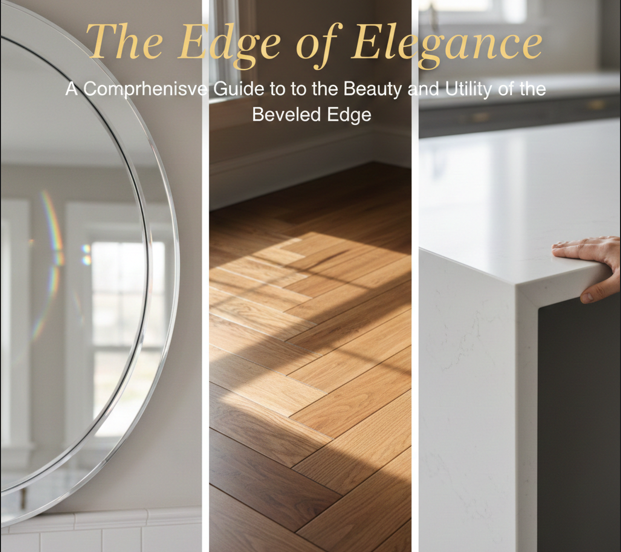
In the world of design, architecture, and craftsmanship, the difference between a project that looks “finished” and one that looks “professional” often comes down to the smallest details. One of the most impactful of these details is the beveled edge. Whether you are browsing for new kitchen countertops, selecting a mirror for your bathroom, or choosing the right flooring for your home, understanding the nuances of the beveled edge can transform your aesthetic and functional choices.
What is a Beveled Edge?
At its most basic level, a beveled edge refers to an edge that is not perpendicular to the faces of the piece.1 Instead of a sharp, 90-degree angle where the top and side meet, a bevel is a slanted surface that connects the two.2+1
While many people use the terms “bevel” and “chamfer” interchangeably, there is a subtle technical difference:
- Bevel: Usually refers to a slope that cuts through the entire thickness of the material.
- Chamfer: Typically refers to a 45-degree transitional slope between two surfaces that does not extend through the whole thickness.
In common parlance, however, the term beveled edge has become the gold standard for describing any angled finish that adds depth, safety, and style to an object.
The Aesthetic Appeal: Why Designers Love the Bevel
The primary reason for the popularity of the beveled edge is its ability to play with light. Because the edge is angled, it catches light differently than a flat surface. This creates a “frame” effect around the object, highlighting its silhouette and adding a sense of three-dimensional depth.
1. Mirrors and Glass
A beveled edge mirror is the epitome of classic luxury. By grinding the edges of the glass to a specific angle, the mirror acts as a prism. This can create subtle rainbows and a brilliant sparkle around the perimeter, eliminating the need for a bulky frame.
2. Flooring and Tiling
In hardwood or laminate flooring, a beveled edge creates a “V” groove between the planks. This definition makes each individual board stand out, giving the floor a more traditional, handcrafted look. Similarly, in subway tiles, a beveled finish adds a vintage, textured feel to a backsplash that would otherwise look flat.3
Beyond Beauty: The Functional Benefits
While it looks stunning, the beveled edge isn’t just about appearances. It serves several practical purposes that make it a superior choice in high-traffic environments.
Enhanced Safety
Sharp, 90-degree corners on stone countertops or glass tables can be hazardous, especially in households with children.4 A beveled edge softens these sharp points, making accidental bumps much less painful and reducing the risk of skin cuts.5+1
Durability and Chip Resistance
Materials like granite, marble, and quartz are prone to “chipping” if struck at a sharp 90-degree angle. By incorporating a beveled edge, the impact is distributed across a slanted surface rather than a precise point.6 This makes the material much more resilient to daily wear and tear.
Ease of Maintenance
In flooring, specifically, a micro-beveled edge can help hide slight irregularities in the subfloor.7 It also provides a “well” for dust to settle in between cleanings, preventing the grit from scratching the main surface of the floor as people walk over it.
Common Applications of the Beveled Edge
The versatility of the beveled edge means you will encounter it in almost every room of the house:
| Application | Purpose of the Bevel |
| Kitchen Countertops | To prevent chipping and provide a comfortable leaning surface. |
| Cabinetry | To create “finger pulls” that allow doors to open without handles. |
| Mobile Phones | To make the device feel thinner and more comfortable in the hand. |
| Carpentry | To create seamless joints (miters) in furniture making. |
Choosing the Right Bevel for Your Project
If you are currently renovating, you might be asked what “degree” of beveled edge you prefer. Here is a quick breakdown of popular styles:
- The Micro-Bevel: A very subtle angle, often seen in modern flooring, that provides definition without deep grooves.8
- The Standard Bevel: Usually a 45-degree cut, common in mirrors and basic countertop finishes.
- The Double Bevel: A slant on both the top and bottom edges, creating a diamond-like profile.9
Consider the Style of Your Home
If you are aiming for a Modern/Minimalist look, you might prefer a very small, tight beveled edge to keep lines clean. If you are going for a Traditional or Victorian vibe, a wide, pronounced bevel on mirrors and cabinetry will add the necessary architectural “weight” to the room.
Conclusion: The Subtle Power of the Angle
The beveled edge is a testament to the idea that the best design is often found in the details. It bridges the gap between form and function, offering a solution that is safer, more durable, and significantly more attractive than a standard square edge.
Whether you are looking to add a touch of “sparkle” to your bathroom mirror or ensure your kitchen island survives the bumps of a busy family life, the beveled edge is a design choice you won’t regret. It is, quite literally, the “cutting edge” of timeless interior design.
Leave a Reply