
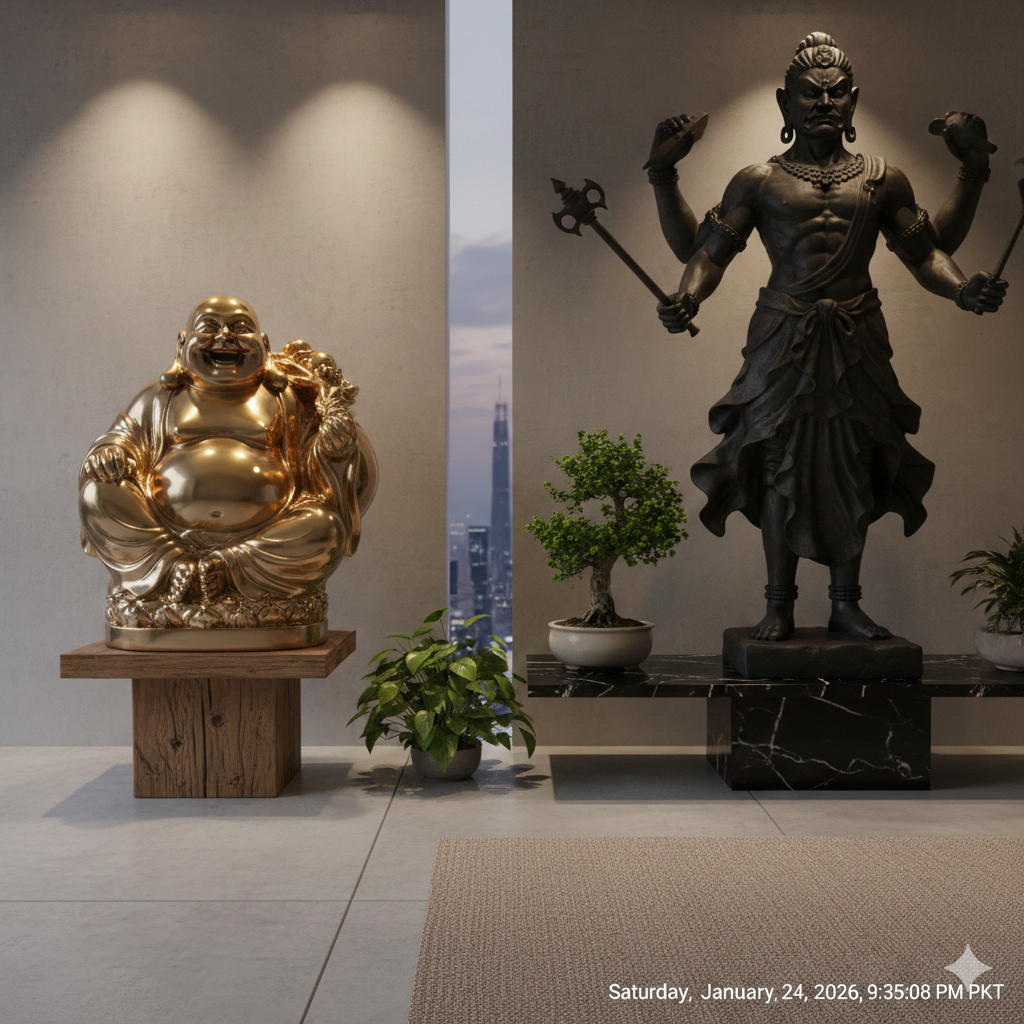
In the realm of spiritual decor and sacred artistry, few figures command as much immediate emotional resonance as the Brass Smile Buddha Sculpture and the Big Black God. While they originate from different aesthetic and cultural lineages, both serve as powerful anchors for mindfulness, protection, and prosperity within a home or workspace.
This guide explores the profound symbolism, craftsmanship, and interior design potential of these two iconic statues, helping you choose the perfect piece to elevate your environment.
The Brass Smile Buddha: The Ambassador of Joy
Often referred to as the “Laughing Buddha” or Budai, the Brass Smile Buddha Sculpture is perhaps the most globally recognized symbol of happiness and plenitude. Unlike the historical Siddhartha Gautama, who is often depicted in deep meditation, the Smiling Buddha represents a 10th-century Chinese monk known for his benevolence and jovial nature.
Why Choose Brass?
Brass is a timeless alloy of copper and zinc, favored by artisans for centuries. Choosing a brass sculpture offers several benefits:
- Durability: Brass does not rust and can last for generations, becoming a family heirloom.
- Acoustic Resonance: In many traditions, tapping brass is believed to clear stagnant energy.
- Golden Luster: The natural yellow-gold hue of polished brass mimics the “light of enlightenment,” adding a warm, premium feel to any room.
Symbolism and Placement
The Smiling Buddha is more than just a decorative piece; it is a “Feng Shui” magnet for positive energy (Qi).
- The Big Belly: Symbolizes an infinite capacity to stomach the world’s troubles and turn them into joy.
- The Sack of Wealth: Usually depicted carrying a bag of treasures, representing the removal of sadness and the arrival of prosperity.
- Placement Tip: Place your Brass Smile Buddha facing the main entrance of your home. It is said to greet incoming energy and transform it into happiness.
The Big Black God: Strength, Protection, and Grounding
The term Big Black God typically refers to Mahakala (in Buddhist and Hindu traditions) or Daikokuten (in Japanese mythology). While the Smiling Buddha brings lightness, the Big Black God brings depth, protection, and the power to overcome obstacles.
The Power of the Dark Aesthetic
In sacred art, “Black” is not a color of mourning, but a symbol of the Absolute—the primordial void from which all creation emerges. A Big Black God sculpture serves as a “wrathful protector,” a figure that guards the household against negative influences and internal doubts.
- Mahakala: Often depicted with a fierce expression, he represents the power of time and the dissolution of the ego.
- Daikokuten: Often rendered in dark bronze or black stone, he is the god of household wealth and the kitchen, frequently seen standing on rice bales.
Comparing the Two: Which One Suits Your Space?
| Feature | Brass Smile Buddha | Big Black God (Mahakala/Daikokuten) |
| Primary Energy | Joy, Abundance, Carefree living | Protection, Strength, Grounding |
| Best For | Living rooms, Entrances, Wealth corners | Study rooms, Home altars, Private offices |
| Material Feel | Bright, Reflective, Warm | Matte, Substantial, Authoritative |
| Spiritual Goal | Attracting prosperity | Warding off negativity |
The Commercial Appeal: Why Collectors Are Buying Now
In 2026, the trend of “Mindful Interiors” has moved beyond simple minimalism. Collectors are looking for statement pieces that have a story.
Investing in Quality Brass
When shopping for a Brass Smile Buddha Sculpture, look for “Lost Wax Casting.” This ancient technique ensures that every detail—from the folds of the robe to the crinkle of the eyes—is captured with precision. High-quality brass gains a beautiful patina over time, which can actually increase the sculpture’s value among vintage collectors.
The Rise of the “Big Black God” in Modern Decor
The rise of the “Big Black God”—often represented in modern decor as matte black sculptures, abstract figures, or Mahākāla-inspired deity statues—signals a shift toward bold, dramatic, and spiritually grounded interiors in 2024–2025. This trend merges the ancient, often intense symbolism of protective deities with contemporary, minimalist aesthetics, making black a statement of power and luxury rather than just a,neutral,.
How to Style These Sculptures in Your Home
Integrating sacred art into a modern home requires a balance between reverence and style.
1. Creating a Zen Corner
Place your Brass Smile Buddha on a wooden pedestal or a marble console table. Surround it with small indoor plants like Bonsai or Money Trees to enhance the “Wood” and “Metal” elements of Feng Shui.
2. The Power Desk
For professionals, placing a Big Black God sculpture on the right side of the desk can symbolize “The Protector” at your back. It serves as a psychological anchor, reminding you to stay firm in your decisions and resilient against stress.
3. Lighting is Everything
- For Brass: Use warm, directional spotlights to make the gold tones pop.
- For Black Sculptures: Use “Rim Lighting” (light coming from behind or the side) to accentuate the silhouette and muscle definition of the deity.
Maintenance and Care
To ensure your sculptures maintain their spiritual and aesthetic integrity:
- For Brass: Use a soft microfiber cloth. If the brass loses its shine, a simple mixture of lemon juice and baking soda can restore its brilliance without harsh chemicals.
- For Black Finishes: Avoid abrasive cleaners. A dry dusting is usually sufficient to keep the deep, dark tones looking sharp.
The Spiritual Synergy
While they may seem like opposites, many practitioners keep both a Brass Smile Buddha and a Big Black God in the same home. Spiritual synergy is the powerful, multiplicative effect created when human effort, faith, or actions align with divine grace or spiritual energy, producing results far greater than the sum of individual parts. It represents a partnership (such as faith with works) that enhances spiritual growth, fosters deep connection, and accelerates purpose.
Finding the Right Source
When purchasing these items, ensure you are buying from artisans who respect the iconographic traditions. Look for:
- Weight: Authentic brass and heavy resin/stone should feel substantial.
- Detail: Look at the hands and face; high-quality sculptures have expressive, life-like features.
- Ethics: Choose suppliers who support traditional metal-smithing communities.
Final Thoughts
Whether you are drawn to the infectious laughter of the Brass Smile Buddha Sculpture or the silent, powerful guardianship of the Big Black God, these pieces are more than just decor. They are daily reminders of the values we wish to cultivate: joy, wealth, protection, and peace.
By bringing these ancient symbols into your 21st-century home, you aren’t just decorating a room—you are sanctifying a space.
Leave a Reply