
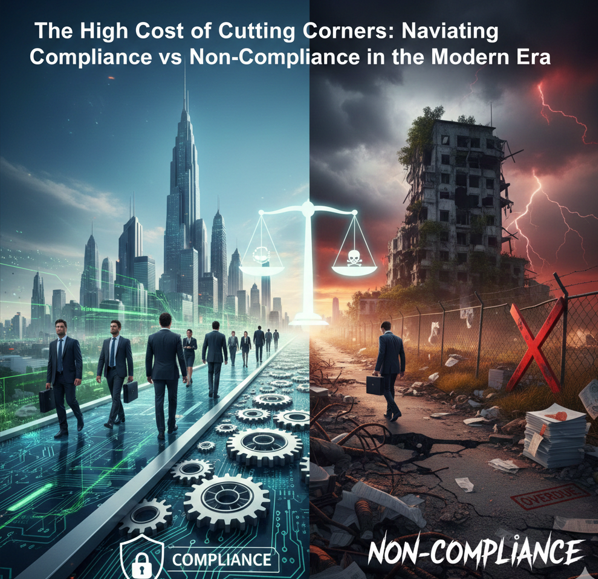
In the world of business, there is a thin line between rapid growth and complete operational failure. That line is often defined by two words: compliance and non-compliance. Whether you are a startup founder or a seasoned executive, understanding the mechanics of these concepts is no longer just a legal requirement—it is a competitive necessity.
What is Compliance?
At its core, compliance is the act of adhering to a specific set of rules, regulations, laws, and ethical standards.1 These mandates can be handed down by governmental bodies (like the GDPR for data privacy or OSHA for workplace safety) or established internally to ensure quality control and brand integrity.2+1
A state of compliance means that an organization is operating within the “rules of the game.” It signals to investors, customers, and employees that the business is stable, ethical, and built to last.3
Understanding Non-Compliance
Conversely, non-compliance occurs when an organization fails—either intentionally or through negligence—to follow these established rules.4 This isn’t just about breaking big laws; non-compliance can manifest in small ways, such as failing to update a privacy policy, ignoring a minor safety protocol, or neglecting a filing deadline.5+1
While non-compliance might offer a short-term shortcut to save time or money, the long-term repercussions are almost always devastating.
The Critical Differences: A Comparison
| Feature | Compliance | Non-Compliance |
| Risk Level | Low & Managed | High & Unpredictable |
| Reputation | Trustworthy & Reliable | Risky & Unprofessional |
| Financial Impact | Steady, Predictable Costs | Heavy Fines & Legal Fees |
| Sustainability | High Long-term Growth | High Risk of Shutdown |
The Hidden Dangers of Non-Compliance
Many organizations fall into the trap of non-compliance because they view regulations as “red tape.” However, the consequences extend far beyond a simple slap on the wrist.
1. Financial Penalties and Fines6
Regulatory bodies have the power to levy astronomical fines.7 In industries like finance or healthcare, the cost of non-compliance can reach millions of dollars, often exceeding the cost of implementing a compliance program by tenfold.
2. Reputational Damage
In the age of social media, news of non-compliance spreads instantly. Once a brand is labeled as untrustworthy—whether due to a data breach or environmental negligence—winning back customer loyalty is an uphill battle that many companies lose.
3. Legal Consequences
Extreme cases of non-compliance can lead to criminal charges, lawsuits from stakeholders, and the permanent revocation of business licenses.8 When a company ignores compliance, it loses its legal shield.
The Benefits of a Proactive Compliance Culture
If you view compliance as a burden, you are missing its potential as a business driver. A robust compliance strategy offers several strategic advantages:
- Operational Efficiency: Standardizing processes to meet compliance standards often uncovers inefficiencies that can be streamlined.9
- Improved Employee Morale: Workers feel safer and more empowered in an environment where compliance with safety and ethical standards is prioritized.10
- Market Access: Many global partners will refuse to work with a vendor that cannot prove strict compliance with international standards (like ISO certifications).11
How to Move from Non-Compliance to Total Compliance
Transitioning away from a state of non-compliance requires a structured approach. It is not about a one-time fix, but about building a sustainable ecosystem.
- Conduct a Gap Analysis: Identify where your current operations fall short of legal requirements.12 Pinpointing areas of non-compliance is the first step toward fixing them.
- Invest in Training: Often, non-compliance is the result of human error.13 Educate your staff on the importance of compliance and how it protects their own jobs.
- Leverage Technology: Modern compliance software can automate monitoring, alerting you to potential issues before they escalate into full-blown non-compliance events.14
- Regular Audits: Don’t wait for a regulator to knock on your door. Internal audits ensure that your compliance measures are actually working in practice.15
Key Takeaway: The cost of compliance is a business expense; the cost of non-compliance is a business threat.
Conclusion
In an increasingly regulated global market, the gap between compliance and non-compliance represents the difference between a thriving legacy and a cautionary tale. While maintaining strict compliance requires constant vigilance and investment, it provides the solid foundation upon which innovation and profit can safely sit.
By prioritizing compliance today, you are effectively insuring your business against the catastrophic risks of non-compliance tomorrow.
Leave a Reply