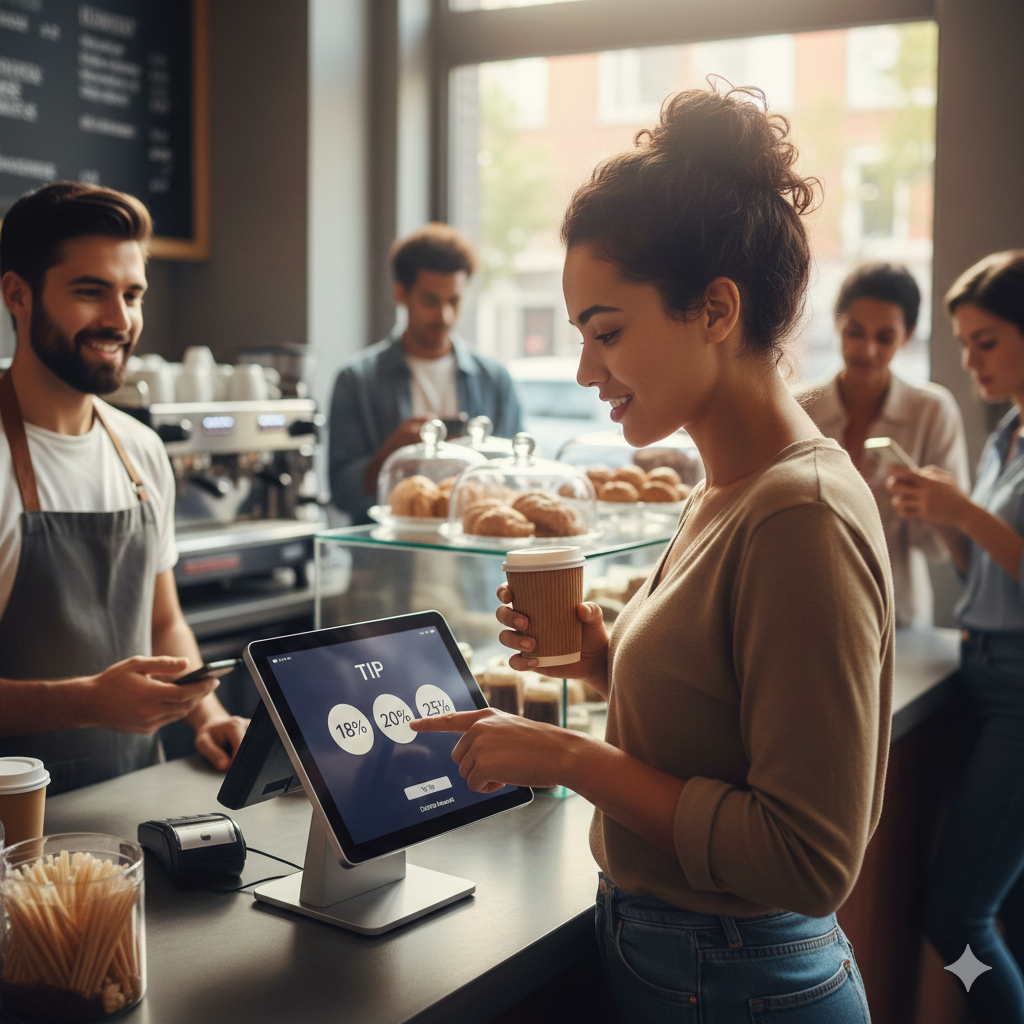
If you have purchased a coffee, a bagel, or even a pre-packaged snack lately, you have likely encountered “the spin.” You finish your transaction, and the cashier swivels a tablet toward you. Suddenly, you are staring at a tip screen offering buttons for 18%, 20%, or 25%—sometimes for a service that took less than thirty seconds.
This phenomenon, often dubbed “tip creep” or “guilt tripping by design,” has transformed the way we think about gratitude, wages, and social pressure. Understanding the mechanics behind the tip screen is essential for navigating today’s economy without blowing your budget or feeling constant social anxiety.
Why Tip Screens Are Suddenly Everywhere
Ten years ago, tipping was largely reserved for sit-down restaurants, hair salons, and taxi cabs. Today, it is ubiquitous. This shift isn’t just a change in cultural norms; it’s a result of technological integration.
- The Point-of-Sale (POS) Revolution: Companies like Square, Toast, and Clover integrated tipping prompts directly into the payment flow. For business owners, enabling a tip screen is as easy as checking a box in the software settings.
- The Post-Pandemic Shift: During the COVID-19 pandemic, customers were eager to support essential workers and local businesses. Tipping at coffee shops and takeout counters became the norm. Once the crisis subsided, the digital prompts remained.
- Labor Costs: With rising inflation and a competitive labor market, many business owners use tip screens to supplement employee wages without having to raise menu prices directly.
The Psychology of “The Spin”
The tip screen is a masterclass in choice architecture. Unlike the old-fashioned glass jar on the counter, which you could easily ignore, a digital screen forces a decision.
- The Default Effect: By pre-setting high percentages (like 20% or 25%), software developers nudge consumers toward higher tips. When we see these numbers, our brains often view them as the “socially acceptable” baseline.
- Social Pressure: When a cashier is standing two feet away while you select your tip, “social desirability bias” kicks in. We want to be seen as generous, or at least not “cheap,” leading many to click a higher percentage than they originally intended.
- The “No Tip” Friction: To leave nothing, you often have to click “Custom Amount” or a small, discrete “No Tip” button. This extra step creates just enough friction to discourage the action.
Tip Screen Etiquette: When Should You Say Yes?
Because tip screens appear everywhere—from self-service kiosks to boutique clothing stores—consumers are feeling tip fatigue. To maintain your financial health while remaining fair to workers, consider these general guidelines:
| Scenario | Suggested Action |
| Full-Service Dining | Standard (18–25%): The screen is replacing the paper receipt; the service remains the same. |
| Coffee Shops/Counter Service | Optional ($1–$2 or 10%): If the barista went above and beyond, a small tip is appreciated but not mandatory. |
| Self-Service Kiosks | Skip: If you scanned the item and paid without human interaction, a tip is generally not expected. |
| Retail Stores | Skip: Tipping for a pair of jeans or a book is a new “creep” that most etiquette experts agree is unnecessary. |
The Impact on Workers and Business Owners
While consumers may feel frustrated, the tip screen has been a lifeline for many service workers. In many cases, digital tipping has increased total take-home pay for baristas and counter staff by 15% to 30%.
However, there is a dark side. Relying on the “generosity of strangers” through a screen can make employee income volatile. It also allows some businesses to keep base wages lower, shifting the responsibility of fair compensation from the employer to the customer.
How to Navigate the Screen Without Guilt
The next time the tablet swivels your way, remember these three tips to stay in control:
- Decide Before You Pay: Before you even walk up to the counter, decide if this is a “tipping occasion.” Having a pre-set rule helps you avoid making an emotional decision under pressure.
- Don’t Fear the “No”: If you are picking up a pre-ordered bag of coffee or a bottle of water, it is perfectly acceptable to select “No Tip.” The cashier processes hundreds of transactions a day; they are likely not judging your individual choice.
- Focus on the Service, Not the Prompt: Tip based on the effort and quality of the interaction, not because the screen suggested a specific percentage.
Conclusion
The tip screen is a tool, not a command. While it has revolutionized the way service workers earn a living, it has also created a high-pressure environment for consumers. By understanding the psychology behind these digital prompts, you can make informed, guilt-free decisions that support the workers you value without overextending your wallet.
The future of tipping is digital, but the power of the “No” button—and the “Custom” button—remains firmly in your hands.
Leave a Reply