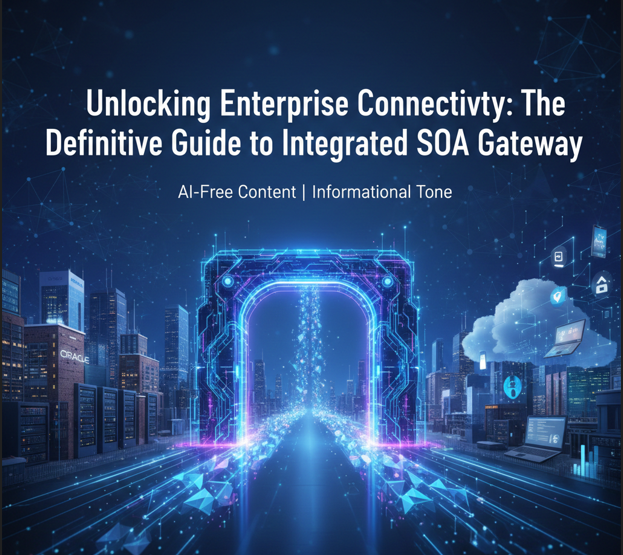
In the modern digital landscape, the ability for different software systems to communicate is no longer a luxury—it’s a survival requirement. For organizations running complex ERP (Enterprise Resource Planning) systems like Oracle E-Business Suite, the Integrated SOA Gateway (ISG) acts as the vital bridge that connects internal business logic with the outside world.
Whether you are looking to automate a supply chain, build a mobile app for your employees, or sync data with a third-party vendor, understanding the Integrated SOA Gateway is your first step toward true digital transformation.
What is an Integrated SOA Gateway?
At its core, the Integrated SOA Gateway is a specialized infrastructure that allows businesses to expose internal business functions as standardized Web Services.
SOA stands for Service-Oriented Architecture. In simpler terms, it’s a way of designing software where different components (services) provide data or functionality to other components over a network. The “Gateway” acts as a secure, managed door through which these services are published, discovered, and consumed.
Why Does Your Business Need an Integrated SOA Gateway?
Before the widespread use of ISG, integrating different software required “point-to-point” coding. This meant developers had to write custom, messy code to link System A to System B. If System A updated, the whole connection broke.
The Integrated SOA Gateway changes this by offering:
- Standardization: It uses universal protocols like REST and SOAP. This means any modern application—regardless of the programming language it was built with—can talk to your ERP.
- Agility: You can deploy new integrations in days rather than months because the “hooks” into your business logic are already pre-built.
- Security: You aren’t just opening your database to the internet. The ISG provides a layer of authentication (like OAuth 2.0 or Username Token) to ensure only authorized users access your data.
- Visibility: It includes a central repository where developers can see exactly what services are available, what they do, and how to use them.
Core Components of the Integrated SOA Gateway
To understand how the gateway works, it helps to look at its internal engine. The architecture is generally divided into three main areas:
1. The Integration Repository
Think of this as a “library” of all possible connections. It stores definitions for various interface types, such as PL/SQL APIs, Java APIs, Concurrent Programs, and Business Events. Developers can search this repository to find the exact function they need to trigger.
2. Service Provider
This component does the heavy lifting of “transformation.” It takes the internal code of your ERP and wraps it in a digital envelope (WSDL for SOAP or Swagger/OpenAPI for REST) so that external systems can read it.
3. Service Monitor
Integration isn’t a “set it and forget it” task. The Service Monitor tracks every request and response passing through the Integrated SOA Gateway. If a transaction fails, the monitor helps you identify exactly where and why it happened.
How the Workflow Functions
How does a piece of data actually travel through the gateway? Here is the typical lifecycle of a service:
- Discovery: An admin looks in the Integration Repository to find a business interface (e.g., “Create Purchase Order”).
- Generation & Deployment: The admin clicks a button to generate a Web Service based on that interface and “deploys” it to the server.
- Consumption: An external application (like an e-commerce website) sends a request to the newly created URL.
- Execution: The Integrated SOA Gateway validates the security credentials, translates the request into a format the ERP understands, and executes the task.
- Response: The ERP sends back a “Success” or “Error” message, which the gateway translates back for the external app.
Best Practices for Implementation
If you are planning to leverage an Integrated SOA Gateway, keep these tips in mind to ensure a smooth rollout:
- Prioritize REST for Mobile: While SOAP is great for complex, stateful transactions, REST is much lighter and faster for mobile applications and modern web front-ends.
- Implement Robust Governance: Don’t expose every API at once. Only deploy what is necessary to reduce your “attack surface” and keep the system manageable.
- Focus on Security: Always use HTTPS and consider implementing a secondary layer of security, like an API Gateway (e.g., OCI API Gateway), if you are exposing services to the public internet.
- Monitor Performance: High-frequency integrations can put a load on your server. Use the Service Monitor to identify bottlenecks.
The Future: Moving Toward the Cloud
While the Integrated SOA Gateway is a powerful tool for on-premise systems, the world is moving toward the cloud. Modern iterations of these gateways are now being designed to work seamlessly with “Integration Cloud Service” (ICS) or “Oracle Integration Cloud” (OIC). This hybrid approach allows you to keep your core data secure on-site while enjoying the flexibility of cloud-based connections.
Conclusion
The Integrated SOA Gateway is the unsung hero of the modern enterprise. It turns a rigid, isolated database into a living, breathing ecosystem capable of interacting with the entire world of digital technology. By stripping away the complexity of custom coding and replacing it with a managed, secure, and standardized framework, it allows businesses to focus on what they do best: innovating and growing.
Leave a Reply